
News Article
Karlsruhe, May 5th, 2026
Co-Creating the Digital Product Passport for Circular Construction
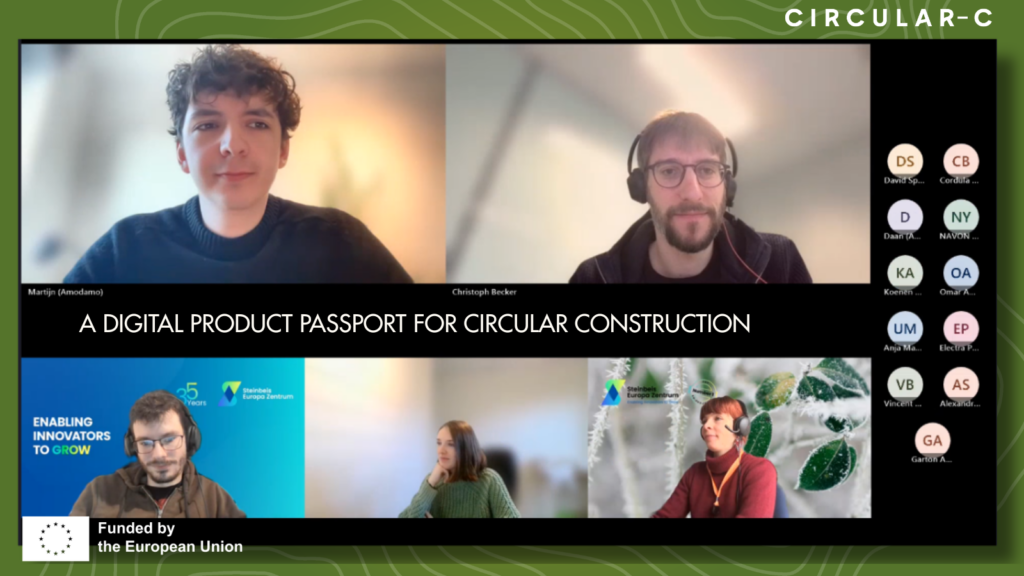
The first CIRCULAR-C co-creation workshop took place on February 16, 2026, and brought together stakeholders from across the construction sector to address a key issue: What information should be included in a Digital Product Passport for bio-based construction materials? Organised by project partners VITO and Amodamo with the support of S2i Steinbeis Europa Zentrum, the workshop was held online. A total of 37 participants joined the interactive exercises and discussed how a digital product passport could support more sustainable and circular construction.
Why better data is key to recycling wood-based materials
In the construction industry, it has significant potential for wood fibre recovery and material recycling. The main barrier to recycling wood products, such as wood panels used for insulation, flooring or furniture, is often the presence of chemical residues from adhesives and coatings. These chemical components are not only harmful to humans and the environment, but also make the recycling of wood products difficult or even impossible. Data collected in a digital product passport could, for example, provide insight into the chemical components used and help recyclers treat the products correctly. At Circular-C, we address these issues in two ways: by developing innovative chemical products, such as bio-based thermoreversible adhesives, and by creating a practical data structure for digital product passports in the construction industry. The latter required significant input and co-creation with knowledgeable stakeholders from this field.
A total of 37 participants from 24 companies and 13 countries took part in the workshop. The group included both members of the CIRCULAR-C consortium and external stakeholders. The main goal of the workshop was to gather practical input from the different stakeholder groups, which included producers, logistics actors, recyclers, research organisations, consultatncies and universities, as well as government bodies and contractors. This broad participation helped ensure that many different viewpoints were included in the discussion. Participants discussed what information they would need from others, what information they could provide themselves, and which data should be considered essential. They also explored possible challenges, such as confidentiality, intellectual property, data ownership and the need for common standards.
From expectations to concrete data requirements
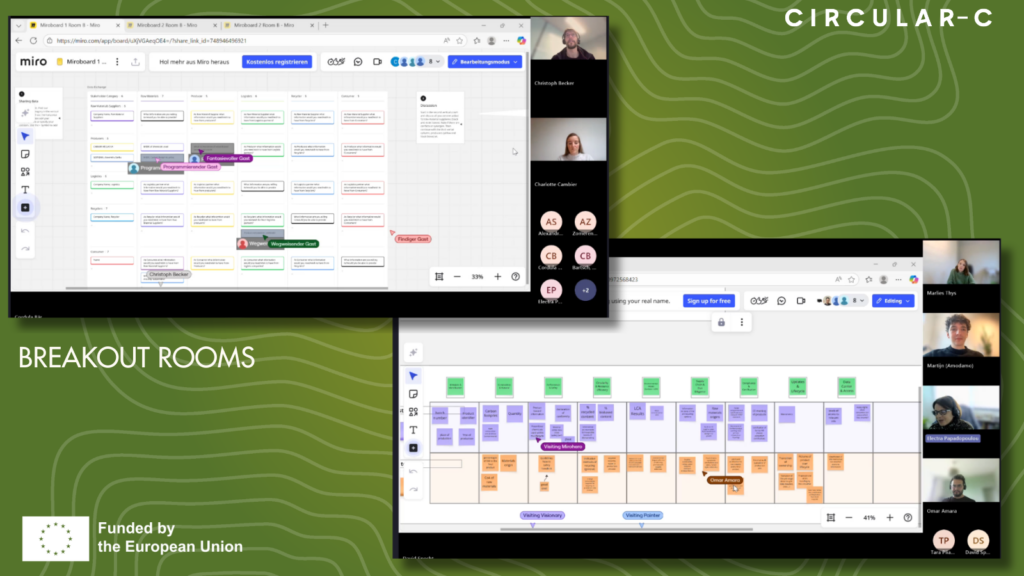
The workshop was held online via Microsoft Teams and used the World Café method, an interactive format based on discussion rounds in breakout groups. This allowed participants to exchange ideas, move between groups and build on each other’s perspectives. The event was organised around three group sessions, helping participants move from general expectations to more detailed discussions about data needs and practical use.
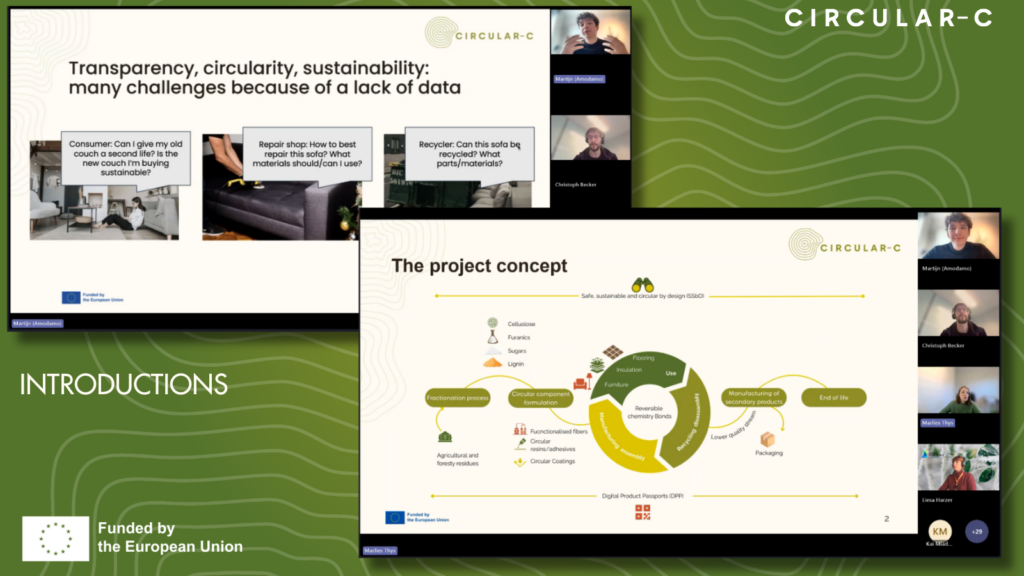
The workshop began with an introduction to the CIRCULAR-C project, the objectives of Work Package 5 and the role of the Digital Product Passport in circular construction. Participants then introduced themselves and their roles. After that, the first main session focused on hopes, benefits and expectations related to Digital Product Passports in the European construction sector.
In the second main session, participants worked together on different information categories that could form part of the passport. For each category, they discussed which data elements were “must-have” and which were “nice-to-have”. They also looked at possible barriers, such as technical feasibility, confidentiality and regulatory requirements. In the final session, the main results were brought together and discussed in a plenary wrap-up.
Balancing traceability, access and confidentiality in passport data
A key part of the workshop was the discussion of nine main data categories: Metadata & Identification, Composition & Material, Performance & Safety, Circularity & Resource Efficiency, Environmental Impact, Supply Chain & Due Diligence, Compliance & Certification, Updates & Lifecycle, and Data Carrier & Access. Together, these categories cover the full lifecycle of a construction product, from its identity and material content to its environmental performance, compliance information and digital access.
The discussions showed strong support for a passport that is clear, machine-readable and useful across the whole lifecycle of a product. Participants highlighted the importance of traceability, material transparency, environmental performance data, circularity indicators, compliance documentation and role-based access to information. At the same time, they also pointed to concerns about confidentiality, intellectual property and keeping data requirements proportionate.
Conclusion –
Building the data foundation for circular construction
The workshop showed that creating a useful Digital Product Passport for bio-based construction materials depends on close collaboration across the value chain. By bringing together diverse stakeholders, it turned broad ideas about circular construction into practical input on the data needed, the barriers to sharing it, and how it can be used in practice.
It also made clear that a future Digital Product Passport should do more than store information: it should support transparency, circularity and trust throughout the product lifecycle. This workshop was an important step toward a solution that is both technically robust and relevant for real-world use.