
News Article
Oline, June 10th, 2026
On 10 June 2026, the Circular-C consortium convened online for its Month 13 meeting, marking the successful completion of the project’s first year. Partners from seven countries shared progress, discussed challenges and opportunities, and aligned on next steps for the development of novel formulations for circular bio-based construction materials to replace fossil-based adhesives, coatings, foams and fibers.
About Circular-C
Circular-C is a Horizon Europe research and innovation project which aims to develop a new generation of circular, safe, sustainable, bio-based adhesives, coatings, and functionalized fibers for use in wood panels for flooring, furniture, and insulation.
To achieve this, sustainable biomass, such as agricultural and forestry residues, is fractionated into cellulose pulp, hemicellulose hydrolysate, and lignin. Starting from these isolated biomass components, further processing is performed via lignin fractionation and lignin depolymerization, as well as the conversion of the hemicellulose hydrolysate into furfural and maleic anhydride stepwise, to create high-performance component formulas. These formulas have the potential to replace formaldehyde and phenol in thermoset adhesives and even create thermoreversible adhesives, as well as replacing fossil-based ingredients in the synthesis of polyurethane (PU) foams and coatings.
The project’s goal is to facilitate the recycling of wood and fiber boards, thereby reducing pressure on virgin wood in the construction sector. By introducing Digital Product Passports, Circular-C is contributing to Europe’s recycling strategy by making product value chains more transparent.
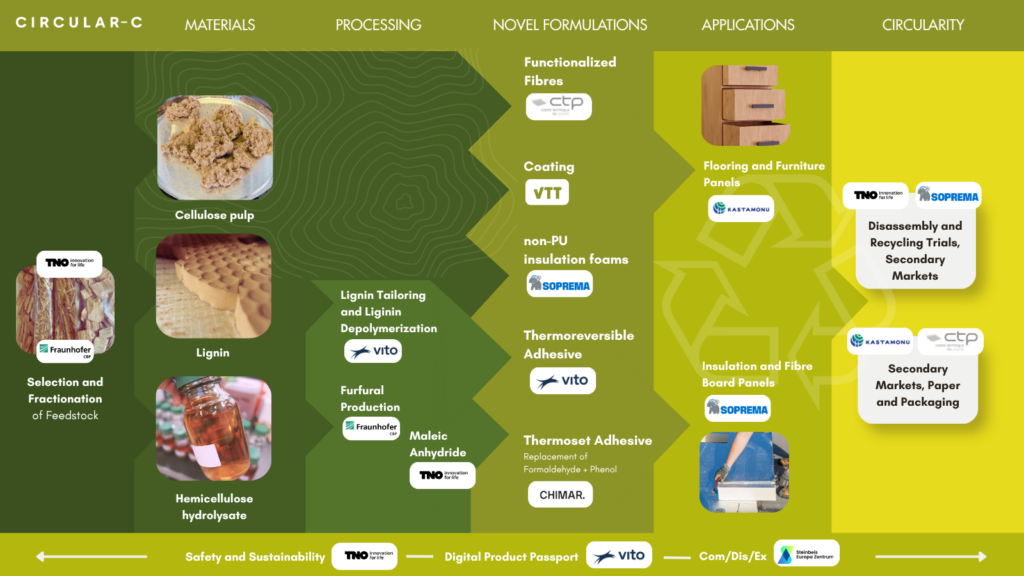
The project ensures an integrated Safe and Sustainable by Design (SSbD) assessment framework alongside end-of-life evaluations. In addition, the project will explore the applicability of lower-quality streams – resulting from the recycling of the bio-based wood panels – to manufacture products for secondary markets, e.g., the packaging industry.
Progress after one Year
Generation: Biorefining of Sustainable Feedstock
After one year, significant progress has been made in optimizing feedstock processing and biomass fractionation. The first pulping campaign successfully processed various raw materials, including beech, birch, wheat straw, and miscanthus. This generated cellulose pulp, hemicellulose sugars and lignin, which were distributed to project partners. A second campaign is planned for August 2026.
In parallel, advances have been made in producing sugar-derived platform chemicals. Furfural production and downstream electrochemical processes for converting furfural into maleic anhydride are moving forward, ensuring a sufficient supply for resin synthesis.
Further lignin tailoring activities provided valuable insights into the depolymerisation and fractionation processes, resulting in tailored lignin fractions and lignin-derived building blocks for subsequent use in material applications.
Formulation: Circular Component Development
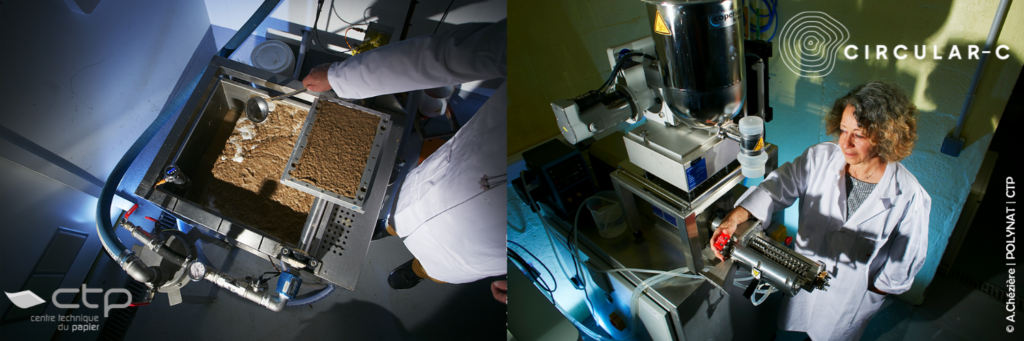
Pulp refining and chemical modification techniques have been tested to meet the required mechanical properties for panels and hand sheets. While conventional refining and chemical modification approaches showed the highest potential, challenges remain regarding the drying and defibration processes.
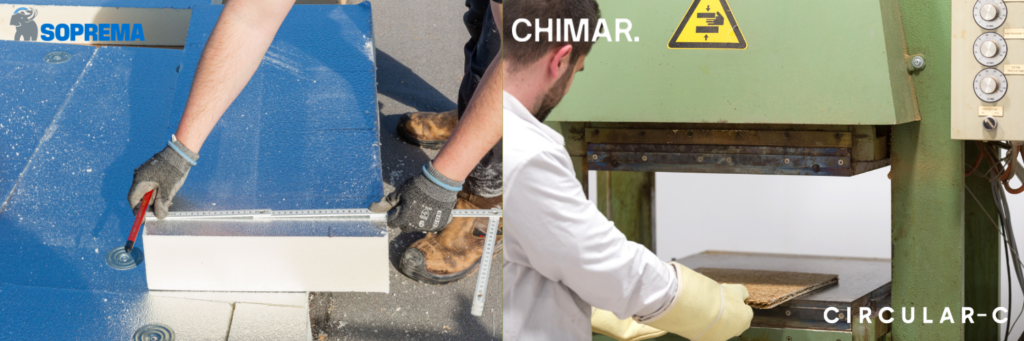
In the development of thermosetting adhesives, multiple lignin-based phenol-formaldehyde thermoset resins were produced by replacing part of the phenol with lignin samples. These resins were successfully tested in the production of plywood panels prepared according to industrial conditions. All the tested formulations met the relevant performance standards, and the lignin samples that performed best were selected for further testing and advancing towards large-scale validation.
Additionally, innovative thermoreversible ahesive systems were developed demonstrating reversible bonding behavior and reprocessability, which are key features of circular construction materials.
Circular coating formulations were advanced as well, including fire-retardant coatings where all samples successfully demonstrated self-extinguishing properties, next to antibacterial coatings where lignin was processed into nanoparticle dispersions.
Re-assembly: Circular Bio-based Construction and Insulation Products
Within the re-assembly work package, partners have started to work on integrating lignin-derived fractions and building blocks with cyclic carbonate linkers to form a crosslinked foam network, targeting the production of non-PU insulation foams. The first promising foam samples have been developed; further process optimization is planned to reduce density and increase the lignin content substantially.
Disassembly, Recyclability and Secondary Markets
The consortium also discussed first steps towards disassembly, recyclability, and secondary market applications. Work has begun on identifying suitable technologies for the mechanical disintegration of panels, with ongoing exchanges between several partners and related initiatives. Initial studies on lower-quality recycled streams indicate that materials can be formed into paper sheets and molded cellulose products, such as packaging applications, although further mechanical testing and process optimisation will be needed to define the most suitable value chains.
Digital Product Passports and Product Information Systems
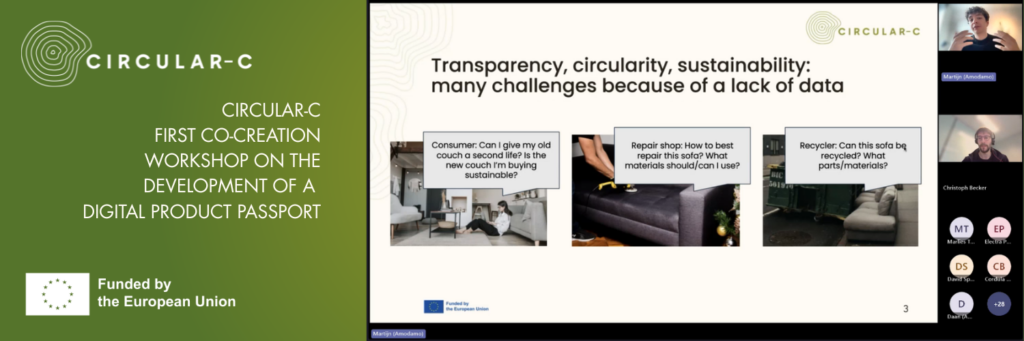
A key milestone has been reached with the finalisation of the data structure for the Circular-C Digital Product Passport (DPP). This structure is the direct result of a dedicated stakeholder workshop held in February 2026, which brought together 44 participants from 25 organisations across 13 countries — representing raw material suppliers, producers, logistics providers, recyclers, research organisations, government bodies, and consultants. The resulting DPP is designed to be compliant with current regulations, aligned with emerging policy trends, and responsive to end-user needs.
In parallel, work has begun on the design and application of Circular-C DPP tags, with the first prototypes now in development. VITO is collaborating with international companies specialising in labelling and tracking solutions to test various tagging methods, ensuring future traceability and transparency throughout the supply chain.
Safe-and-Sustainable-by-Design (SSbD)
Safe-and-sustainable-by-design (SSbD) assessments accompany the technical development from an early stage. The highlight of the M13 meeting was a dedicated workshop hosted by TNO, during which the consortium agreed on the boundaries of the techno-economic assessment, the process assumptions, and the reference systems for the different value chains. The consortium also reviewed the results of the Early Stage Responsible Innovation (ESRI) assessment. It is an online early stage SSbD screening tool, developed by TNO, which was used to assess the value chains of insulation panels and foams as well as furniture and flooring panels. Such discussions help to identify potential areas for improvement at an early stage, such as solvent use, critical raw materials, recyclability, economic performance and product functionality. This ensures that safety and sustainability considerations are integrated into material development from an early stage rather than being assessed only at the end of the project.
Communication, Stakeholder Engagement and Exploitation
The first project year has also laid the foundation for communication, stakeholder engagement, and future exploitation. Promotional materials, stakeholder mapping activities and synergies with related initiatives are being developed to increase the project’s visibility and strengthen connections with relevant networks, including the New European Bauhaus community and initiatives such as EcoReFibre with InnovaWood as well as the SIRCULAR and ReHouse projects. At the same time, partners have started preparing the exploitation pathway by reviewing background and foreground knowledge and identifying potential key exploitable results. This early preparation will support the transition from promising research outcomes to future applications in circular construction material value chains.