
Background
The environmental footprint
Europe’s building sector faces intertwined environmental, regulatory, and technical hurdles as the largest contributor to the EU’s total environmental footprint and CO₂ emissions.
Studies show major resource extraction and waste occur in:
- construction
- and demolition phases of buildings.
This calls for more sustainable solutions.
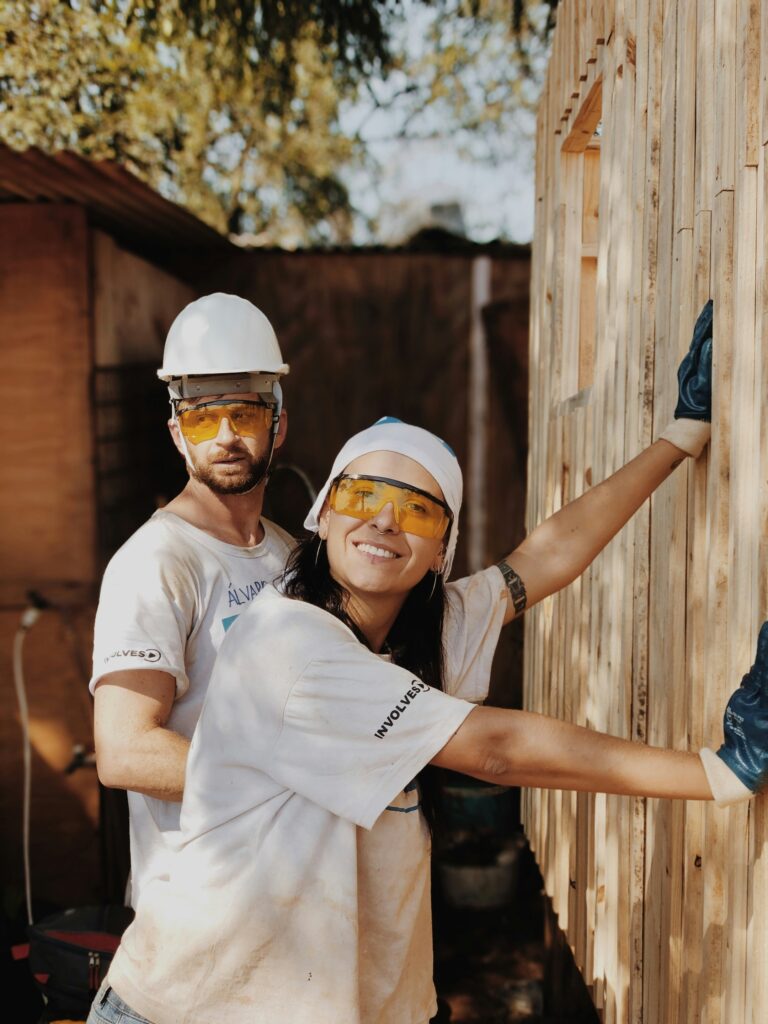
The main problem: contaminated wood fibers
Persistent adhesive residues pose a significant challenge to sustainability, severely hindering recycling efforts. The dominant binder in wood panels is urea-formaldehyde adhesive, which forms complex polymer structures that degrade particle quality and introduce chemical impurities.
60% of collected wood waste is contaminated with toxic adhesive residues!
Currently the built industry relies on:
- fossil-based materials
- hazardous chemicals
- and non-debondable binders
This prevents effective material recovery and reduces the quality and value of recyclables overall!

Current challenges to large-scale production of reuse and recycling:
- fragmented policy frameworks
- immature markets for recycled and bio-based products
- technical complexities to monitor recycling
An urgent and holistic transformation is required if Europe is to meet its climate targets and ensure that the building sector becomes more resilient, affordable and circular for future generations.
Our ideals in CIRCULAR-C
- Therefore, transitioning to renewable resources, bio-based adhesives, and functionalized fibres is essential to unlock the full benefits of circularity, minimize waste, and maximize reuse.
- Furthermore, digitalization, standardized documentation, and new business models are needed to connect stakeholders, support innovation, and transform linear practices into integrated, circular value chains.